
Does dental insurance cover that? How your PPO plan actually works
What a typical PPO dental plan pays for cleanings, fillings, crowns, root canals, dentures and implants, plus deductibles, maximums and waiting periods.
Published September 2, 2026
Dental insurance is not like medical insurance. It is closer to a prepaid discount plan with a yearly cap, and once you understand the four numbers on it, the bills stop being surprising. Here is how a typical PPO plan works, treatment by treatment.
The four numbers that decide everything
- Deductible — what you pay first each year before the plan pays anything, commonly $50–$100. Often waived for preventive care.
- Coverage percentages — the share the plan pays in each category, usually 100 / 80 / 50.
- Annual maximum — the most the plan pays in a year, usually $1,000–$2,000. After that, everything is on you until the plan year resets.
- Waiting periods — on new plans, months before basic (often 6) and major (often 12) care are covered.
Coverage by treatment
| Treatment | Typical category | Typical plan pays | Notes |
|---|---|---|---|
| Exam & cleaning | Preventive | 80–100% | Usually 2 per year; deductible often waived |
| X-rays | Preventive | 80–100% | Full set every 3–5 years; bitewings yearly |
| Fillings | Basic | 70–80% | Some plans pay less for white fillings on back teeth |
| Emergency exam | Basic | 70–80% | |
| Deep cleaning (gum disease) | Basic or periodontal | 50–80% | Often limited to once every 2–3 years per area |
| Root canal | Basic or major (varies) | 50–80% | The crown afterwards is separate |
| Crown or bridge | Major | ~50% | Replacement usually only after 5–7 years |
| Dentures | Major | ~50% | Replacement every 5–7 years; relines often covered |
| Implants | Major (if covered) | ~50% | Check for exclusions and the missing-tooth clause |
| Whitening, veneers | Cosmetic | 0% | Not covered |
Percentages are typical, not universal. Your plan’s document (or a two-minute call from our office to your insurer) gives the real figures.
Worked example
Say your plan has a $50 deductible, 100/80/50 coverage and a $1,500 maximum, and you need a crown that costs $1,300.
- You pay the $50 deductible.
- The plan pays 50% of the remaining $1,250 = $625.
- You pay $50 + $625 = $675.
- Your remaining annual maximum drops to $875.
If you needed a second crown the same year, the plan would pay at most $875 more — which is why timing matters.
Five things that trip people up
- The annual maximum has not increased in decades. $1,000–$1,500 was generous in the 1980s; today it covers one crown. Big treatment often needs to be planned across two plan years.
- “In-network” changes your share. In-network dentists have agreed fees with the insurer; out-of-network care is usually still covered, but on a different fee schedule. Most PPO plans let you choose.
- Frequency limits. Two cleanings a year, one set of X-rays, a crown replacement only after five years — even when it is needed sooner.
- The missing-tooth clause. Some plans will not pay to replace a tooth lost before coverage began.
- Pre-authorisation. For major work, we can submit a pre-treatment estimate so you know the plan’s answer before you commit.
What to do before treatment
Give us your plan details when you book. We verify your benefits — deductible, remaining maximum, waiting periods, exclusions — and put the real numbers on your written plan before anything is scheduled. If the plan falls short, financing spreads the balance into monthly payments, and HSA/FSA funds can be used.
No insurance?
You are not stuck. Our new patient special covers the exam, X-rays and cleaning at a set fee, and for larger work the difference between an insured and uninsured price is often smaller than people expect once the annual maximum is taken into account. Call (512) 838-3888 and ask — we will give you straight numbers.
Treatments mentioned in this guide
Cleanings & Checkups
The visit that keeps everything else simple: a thorough cleaning, a careful exam and an honest plan.
Learn more
Dental Crowns & Bridges
Protect a damaged tooth or replace a missing one with a crown or bridge that looks and feels like your own.
Learn more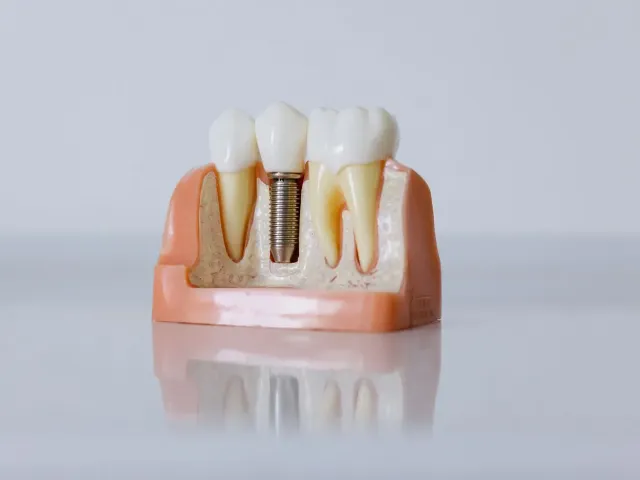
Dental Implants
A permanent, natural-looking replacement for a missing tooth — and the only option that protects the bone underneath.
Learn moreQuestions patients ask us
Preventive care: routine exams, cleanings (usually two a year), and X-rays on a schedule. Many plans do not even apply the deductible to these.
Crowns are 'major' care on most plans, covered at around 50% after the deductible. If the plan's annual maximum ran out, it may have paid even less.
A rule in some plans that excludes replacing a tooth that was already missing before your coverage started. It affects bridges, dentures and implants — we check for it before quoting.
Almost never. Whitening and other purely cosmetic treatments are excluded from nearly all plans.
Ready to schedule your visit?
Book online in about two minutes, or call and speak with our team. We are happy to answer any questions before your appointment.